

Over the past 48 hours, the EUR/USD pair exhibited notable volatility, slipping slightly from yesterday’s closing price of 1.14673 to around 1.1460 in the early Asian session. The euro’s weakness was primarily driven by concerns over slow progress towards a US-Iran peace deal, as uncertainties around geopolitical tensions weighed on investor confidence in euro assets.
Meanwhile, the US dollar has been supported by the Federal Reserve’s hawkish stance, with the dollar index pressing against a multi-month resistance. The Fed’s firm messaging has bolstered the dollar, putting downward pressure on the euro. Although some traders are scaling back expectations for future Fed hikes amid hopes of eased geopolitical tensions, this optimism has yet to significantly boost the euro in the short term.
For the average investor, this means the recent dip in the euro is rooted in tangible factors: the interplay of global political risks combined with US monetary policy outlooks. Markets remain focused on developments in the US-Iran peace process and Fed policy signals to gauge the next directional move. In this environment, investors are advised to stay vigilant and keep an eye on market news to respond swiftly to volatility.
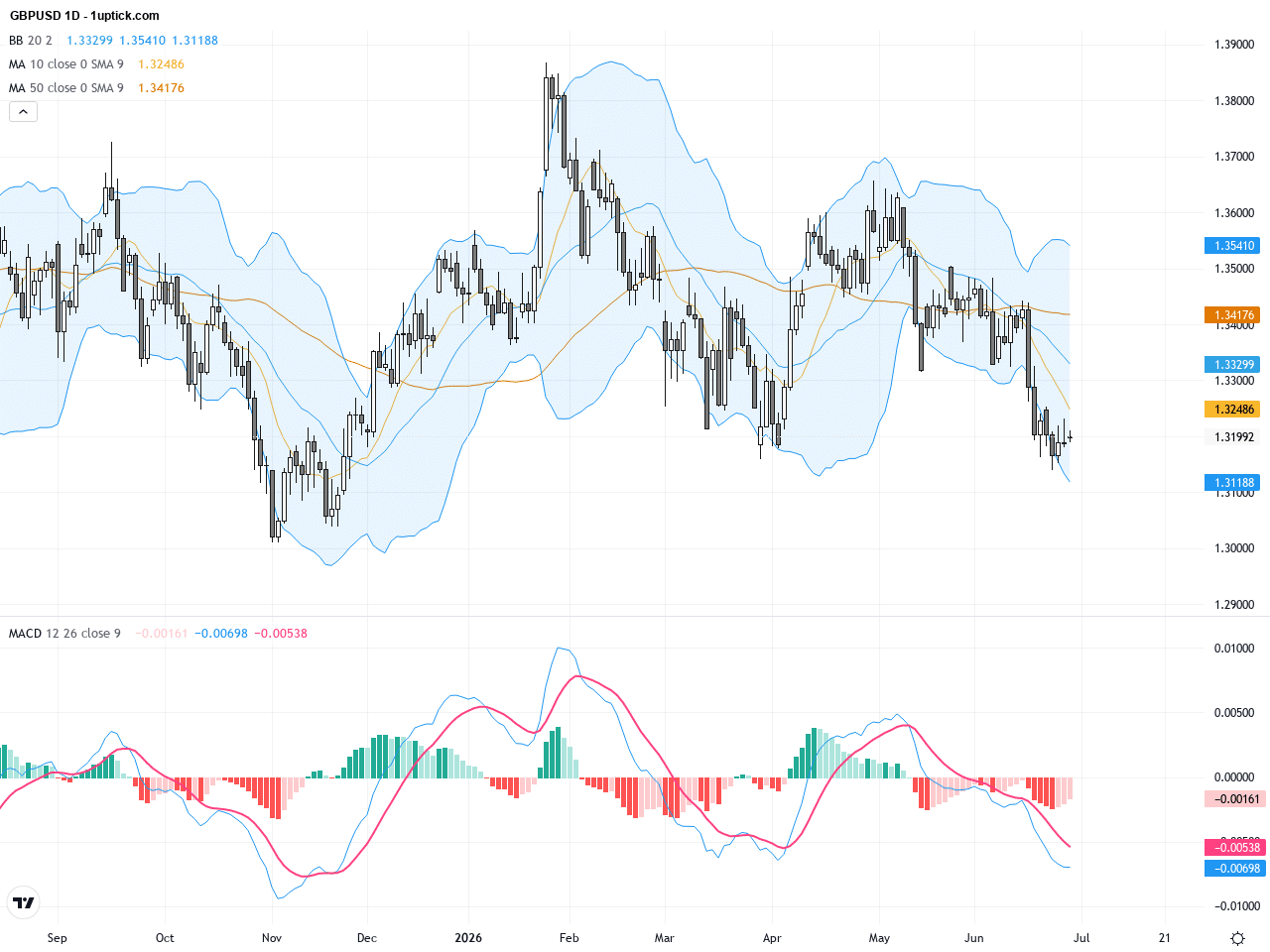
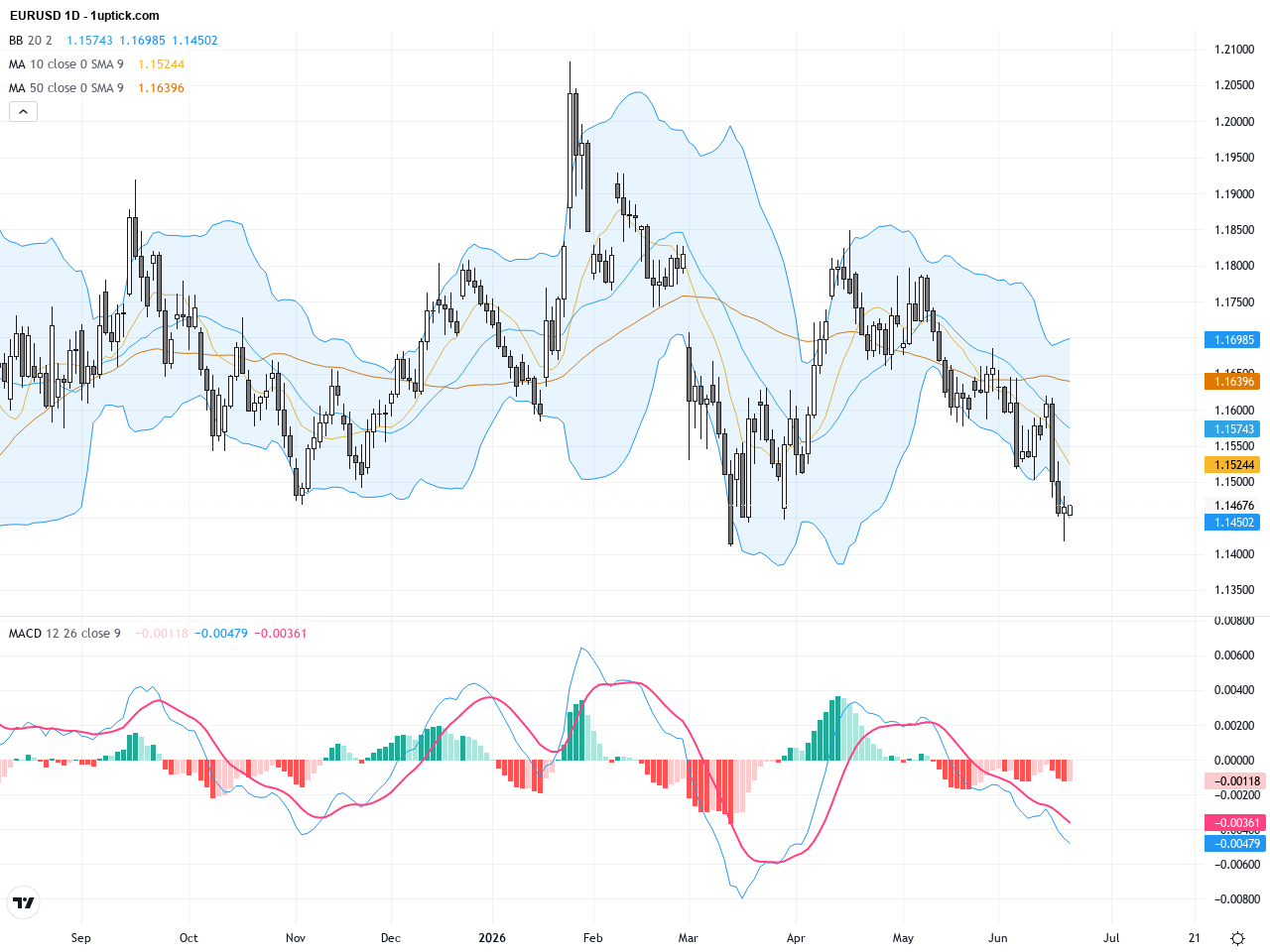
The daily chart reveals a clear downtrend since early 2026, with EURUSD falling from a high of 1.2083. The pair faces resistance at the 50-day (1.1641) and 200-day (1.1668) moving averages. The Bollinger Bands have contracted, signaling lower volatility, while MACD remains below zero, indicating continued bearish momentum. A decisive break below the 1.1450 support could test the year’s low at 1.1391. Overall, the longer-term trend remains cautiously bearish.
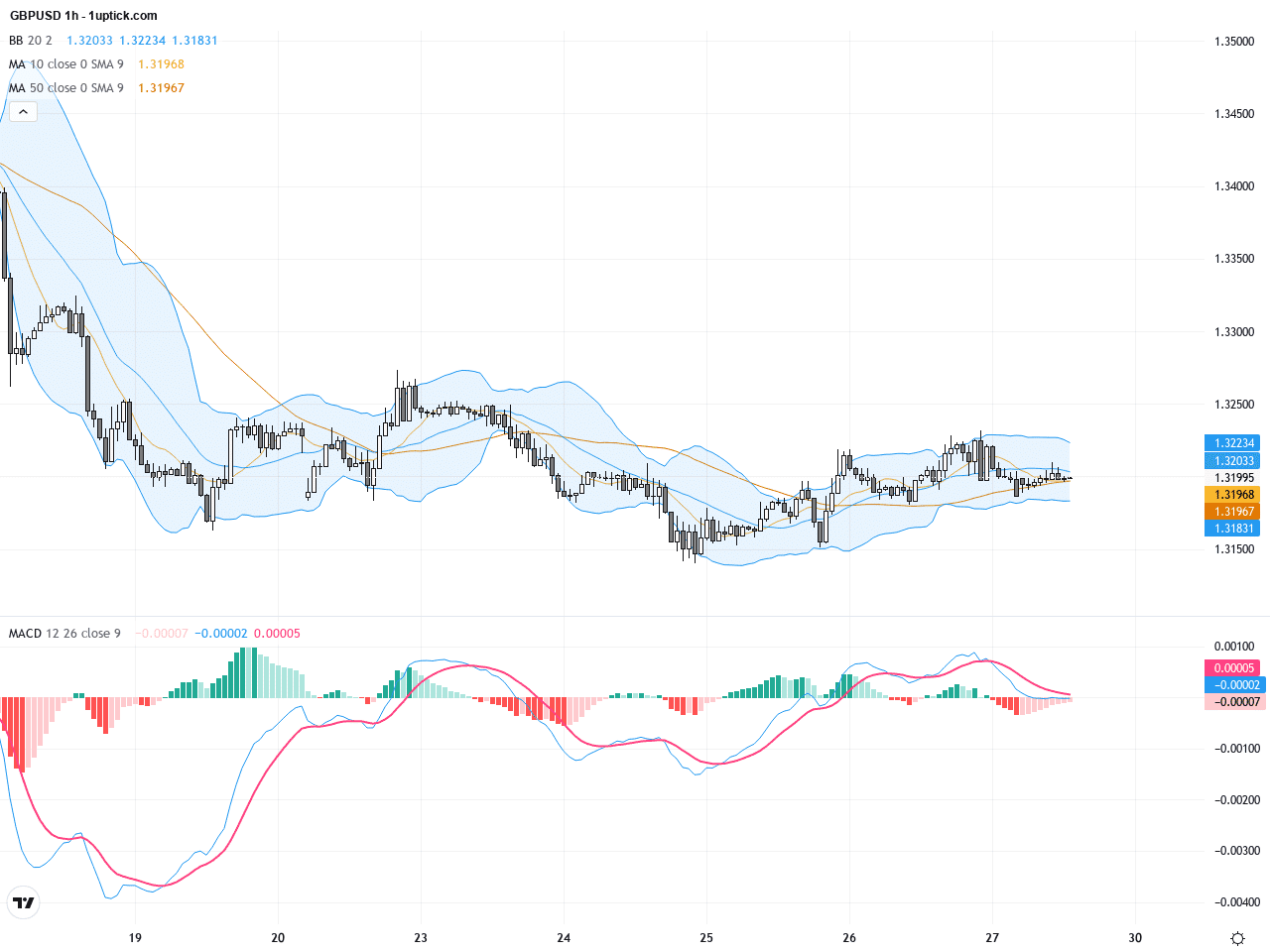
On the hourly timeframe, EURUSD has been consolidating between 1.1450 and 1.1500 over the past 3-5 days. The Bollinger Band middle line offers short-term resistance, while MACD shows a slight bearish crossover. Price attempts to break above 1.1500 have so far failed, and the RSI remains weakly bearish near mid-levels. This suggests the pair may continue to oscillate within the range until a fundamental catalyst triggers a breakout.
Technical Trend: Cautiously Bearish Consolidation
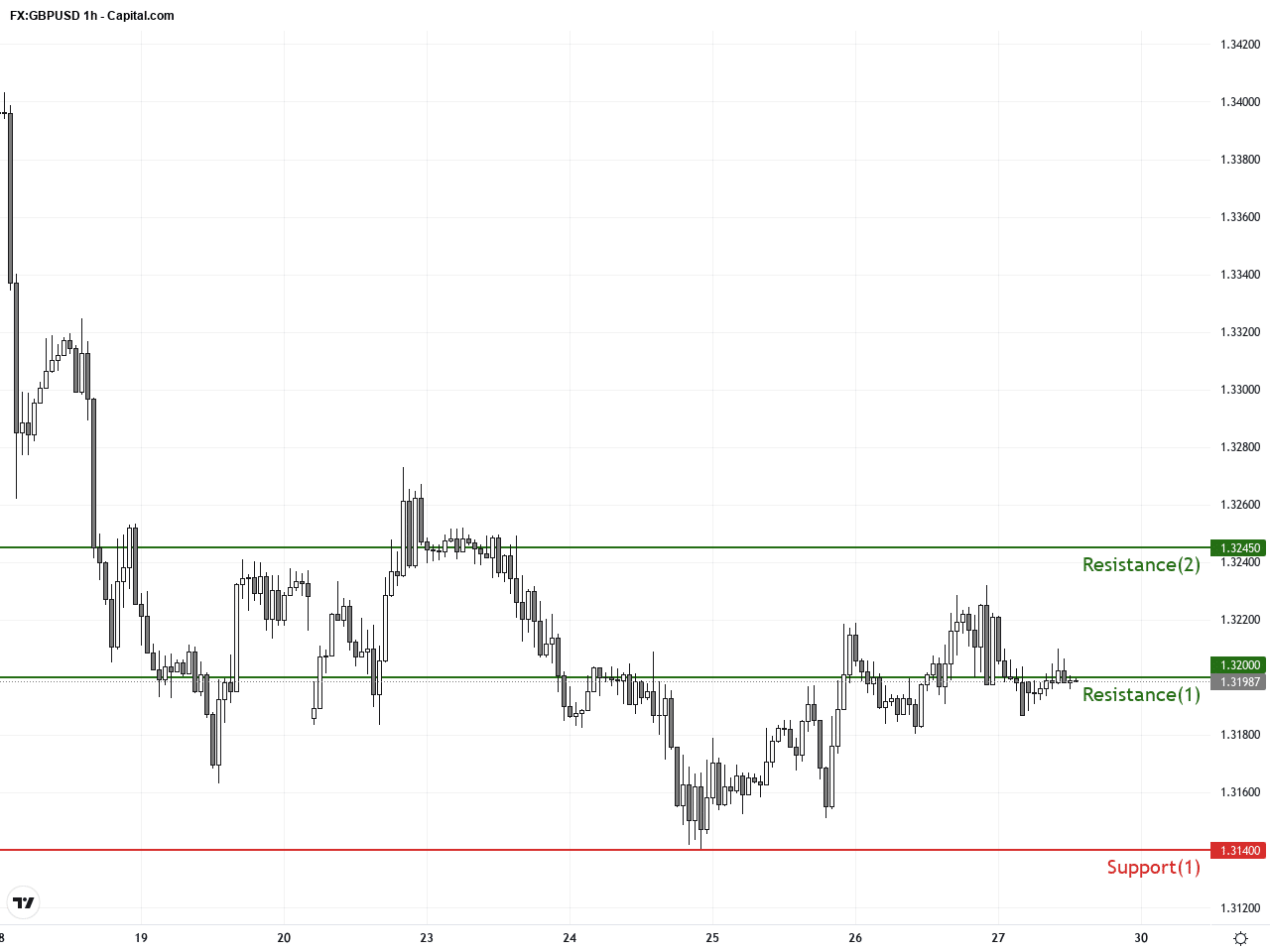
EURUSD currently faces structural bearish pressure but remains supported near 1.1450, forming a consolidation phase. Daily MACD bearish crossover combined with Bollinger Bands tightening points to a volatility squeeze, potentially broken by upcoming news. Hourly patterns show short-term resistance and weakening momentum, suggesting a likely continuation of range-bound price action. Traders should monitor 1.1450 support closely, along with the upper resistance near 1.1500-1.1530 for potential breakout confirmation.Today’s GMT+1 economic calendar presents limited direct events impacting EURUSD. ECB Chairman speaks and a FOMC member’s speech in the afternoon will be the key focus; if hawkish, they could weigh on the euro. Polish industrial production and retail sales data at 09:30 provide some regional insight but are less likely to move EURUSD materially. Overall, no immediate high-impact releases are expected, but market participants will keenly watch for central bank communication cues.
Resistance & Support
The above financial market data, quotes, charts, statistics, exchange rates, news, research, analysis, buy or sell ratings, financial education, and other information are for reference only. Before making any trades based on this information, you should consult independent professional advice to verify pricing data or obtain more detailed market information. 1uptick.com should not be regarded as soliciting any subscriber or visitor to execute any trade. You are solely responsible for all of your own trading decisions.